Best Espresso Machines Under $500
A daily Starbucks latte costs roughly $6. That's $2,190 a year — enough to buy every machine on this list and still have money left for beans. The question isn't whether a home espresso machine saves money. It does. The question is which machine matches your actual workflow: do you want grind-to-cup convenience, automatic milk texturing, a machine you can mod for the next decade, or just the cheapest real espresso you can get? We reviewed four machines across 38,000+ combined Amazon reviews and ranked them by the specific problem each one solves best.
Quick Comparison
| # | Machine | Rating | Price | Best For |
|---|---|---|---|---|
| 1 | Breville Barista Express BES870XL | 4.5★ | $$$ | Home baristas who want grind-to-cup in one machine |
| 2 | Breville Bambino Plus BES500BSS | 4.6★ | $$ | Beginners who want automatic milk texturing |
| 3 | Gaggia Classic Pro RI9380/46 | 4.5★ | $$ | Espresso enthusiasts who want to mod and grow |
| 4 | De'Longhi Dedica Deluxe EC685M | 4.5★ | $ | First real espresso machine, small kitchens |
$ = under $250 · $$ = $300–$500 · $$$ = $500+. Check product pages for current Amazon pricing.
Full Reviews
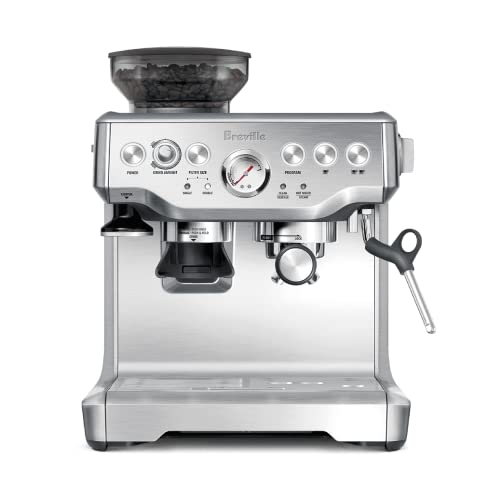
The machine that ends the "which grinder should I buy?" question. Built-in conical burr grinder, dose-control, PID temperature. 26,000 reviews is the social proof signal — this is the most validated espresso machine on Amazon. The all-in-one design means you're pulling shots on day one, not researching grinders for three weeks.
- ✓Built-in conical burr grinder with dose-control — no separate grinder purchase needed
- ✓PID temperature control for consistent extraction shot to shot
- ✓26,000+ reviews at 4.5★ — the most buyer-validated espresso machine on Amazon
- ✓Steam wand with enough power for microfoam latte art
- ✓Includes all accessories: tamper, razor dose trimmer, cleaning kit
- ✗Footprint is large — needs dedicated counter space (13" x 16")
- ✗Learning curve is real: dialing in grind size and dose takes practice
- ✗Built-in grinder is good, not great — serious grind upgraders may outgrow it
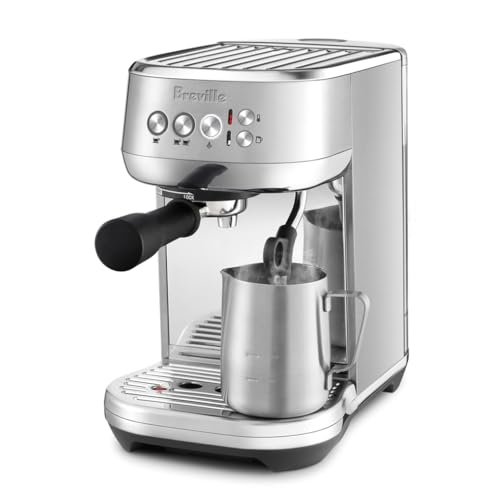
The machine for people who want results, not a hobby. 3-second heat-up, automatic milk texturing with a temperature probe, and a footprint barely wider than a toaster. 4.6 stars is the highest rating in this lineup — beginners love it because it removes the variables that make espresso intimidating.
- ✓3-second heat-up — from off to pulling a shot in under 5 seconds
- ✓Automatic milk texturing with temperature probe — hands-free lattes
- ✓4.6★ — the highest rating of any machine in this roundup
- ✓Compact footprint fits in tight kitchens next to a toaster
- ✓Pre-infusion function wets the grounds before full pressure for better extraction
- ✗No built-in grinder — you need to buy one separately ($100–$200 more)
- ✗54mm portafilter limits aftermarket basket options vs. 58mm standard
- ✗Water tank is small (64 oz) — frequent refills if you make multiple drinks
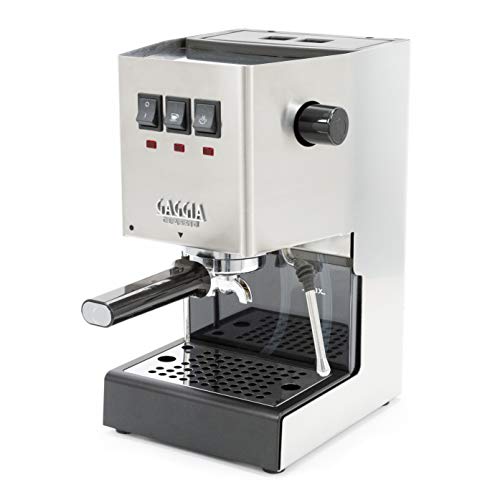
The machine you buy when you already know what a "bottomless portafilter" is. Made in Italy, 58mm commercial-standard portafilter, 3-way solenoid valve. The modding community is massive — OPV spring swap, PID kits, IMS baskets. This is the machine that grows with you for 10+ years.
- ✓58mm commercial-standard portafilter — widest aftermarket accessory ecosystem
- ✓Made in Italy with commercial-grade group head and boiler
- ✓3-way solenoid valve for clean, dry pucks after extraction
- ✓Massive modding community — OPV spring, PID kits, IMS baskets all well-documented
- ✓Built to last 10+ years with basic maintenance and descaling
- ✗No PID out of the box — temperature surfing required until you add one ($50–$100 mod)
- ✗Steam takes 30–60 seconds to switch from brew mode — slower workflow
- ✗Learning curve is steep — this machine rewards skill, not convenience
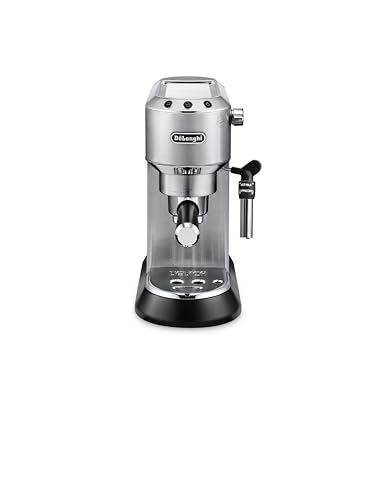
The entry ticket. At $200, it's the only machine at this price with a real 15-bar pump, metal construction, and a thermoblock that heats in 40 seconds. Six inches wide — it fits where nothing else does. The Pannarello wand won't make latte art, but it makes actual cappuccino foam.
- ✓Under $200 — the lowest entry point for a real pump-driven espresso machine
- ✓Only 6 inches wide — fits in kitchens where no other machine can
- ✓15-bar pump with metal construction — not a plastic toy machine
- ✓Thermoblock heats in 40 seconds — faster than any boiler-based machine at this price
- ✓Pannarello steam wand produces thick cappuccino-style foam with zero technique
- ✗Pressurized baskets only — limits extraction quality vs. unpressurized machines
- ✗Pannarello wand cannot produce microfoam for latte art
- ✗Plastic drip tray and water tank feel cheaper than the metal body suggests
Which Espresso Machine Should You Buy?
Frequently Asked Questions
What is the best espresso machine under $500?
Do I need a separate grinder for an espresso machine?
Is a $200 espresso machine worth it?
What is the difference between the Breville Barista Express and the Bambino Plus?
How long do espresso machines last?
Related Espresso Reviews
Get our best picks in your inbox
No spam. Just honest Amazon reviews, once a week.
Unsubscribe any time. We'll never sell your address.