You Want Restaurant-Quality Smoked Brisket Without Standing Over a Fire for 14 Hours — The Traeger Pro 575 Lets You Watch the Game Instead
You've tried the charcoal thing. You set the alarm for 4 AM, lit the coals, babied the vents for an hour trying to hold 225°F, and then spent the next twelve hours checking every thirty minutes because one gust of wind sends the temperature swinging 50 degrees in either direction. By the time the brisket is done, you've missed the game, burned through a bag of charcoal, and you're too exhausted to enjoy the food. The brisket was fine — not great, not terrible — but the process nearly killed you.
The Traeger Pro 575 exists for people who want the result without the suffering. It's a pellet grill: you pour hardwood pellets into an 18 lb hopper, set your target temperature on the digital controller (or from your phone via WiFi), and the grill feeds pellets into a fire pot automatically to maintain that temperature within a few degrees. No vent adjustments. No charcoal management. No 4 AM wake-up calls. Set it, smoke it, forget it — then check your phone from the couch when the meat probe hits 203°F.
Is it cheating? Charcoal purists will say yes. The 5,000+ Amazon buyers averaging 4.6 stars will say they don't care — their pulled pork is better than it's ever been, and they actually enjoyed the process for once. This review breaks down exactly what the Traeger Pro 575 does well, where it falls short (searing, cleaning, pellet cost), how the WiFIRE app actually performs, and whether it justifies the premium over budget pellet grills like the Pit Boss 700FB and Z Grills 700E.
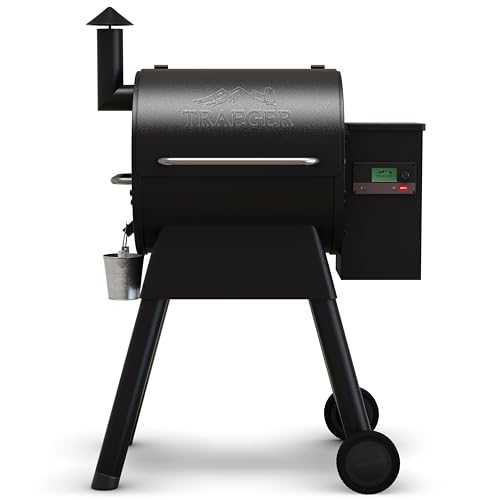
Traeger Pro 575 Wood Pellet Grill
★ 4.6 · 5,000+ reviews
- Cooking Area: 575 sq in
- Temp Range: 175°F–450°F
- Hopper: 18 lbs capacity
- WiFi: WiFIRE technology · app control
- Weight: ~87 lbs
- Warranty: 3-year limited
Is This Page For You?
This review helps if…
- ✓ You want to smoke brisket, ribs, or pork shoulder without babysitting a fire all day
- ✓ You're tired of fighting temperature swings on a charcoal grill or offset smoker
- ✓ You want WiFi/app control so you can monitor cooks from inside the house
- ✓ You're deciding between the Traeger Pro 575 and budget alternatives like Pit Boss or Z Grills
You may want a different grill if…
- ✗ You need high-heat searing above 450°F — pellet grills aren't built for that
- ✗ You cook for large crowds and need more than 575 sq in of grill space
- ✗ You want the cheapest possible pellet grill — the Pit Boss 700FB does more for less
How the Traeger Pro 575 Compares
| Spec | Traeger Pro 575 | Pit Boss 700FB | Z Grills 700E | Camp Chef Woodwind 24 |
|---|---|---|---|---|
| Cooking Area | 575 sq in | 700 sq in | 694 sq in | 811 sq in |
| Max Temp | 450°F | 500°F | 450°F | 500°F |
| Hopper Size | 18 lbs | 21 lbs | 20 lbs | 22 lbs |
| WiFi | Yes (WiFIRE) | No (select models) | No | Yes |
| Weight | ~87 lbs | ~70 lbs | ~82 lbs | ~97 lbs |
| Stars | 4.6 | 4.5 | 4.5 | 4.7 |
| Warranty | 3-year | 5-year | 3-year | 3-year |
The Pit Boss 700FB offers more cooking area and higher max temp for less money. The Z Grills 700E is a solid budget option with similar specs. The Camp Chef Woodwind 24 is the premium choice with WiFi and the largest cooking area. The Traeger's advantage is the WiFIRE app ecosystem, brand recognition, and the most polished out-of-box experience.
What 5,000+ Verified Buyers Report
Temperature Control — The Whole Point of Going Pellet
The D2 drivetrain in the Pro 575 maintains temperature within roughly ±15°F of your set point once it's dialed in — a massive improvement over manually managing charcoal vents. Reviewers consistently describe the experience as “set it and walk away.” You pick 225°F for a brisket, the grill feeds pellets to hold it there, and you check your phone occasionally instead of hovering over the pit. The startup cycle takes about 5–7 minutes, and temperature recovery after opening the lid is faster than earlier Traeger models. This is the feature that converts charcoal users — once you cook a 12-hour brisket without touching the grill, you don't go back.
WiFIRE App — Great When It Works, Frustrating When It Doesn't
The WiFIRE app is the single most polarizing feature in the reviews. When it works, it's genuinely useful: you can monitor grill temp and meat probe temp from anywhere, adjust the set temperature without going outside, and get push notifications when your meat hits target. The recipe library has 1,500+ guided cooks with time and temp instructions. But the “when it works” caveat is real — a significant minority of reviewers report WiFi connectivity drops, app crashes, and difficulty with initial pairing. Most connectivity issues trace to weak backyard WiFi signal rather than the grill itself. If your router is on the opposite side of the house from your grill, consider a WiFi extender. The grill works perfectly without the app, so this is a convenience issue, not a functionality issue.
Build Quality — Solid but Not Bombproof
The Pro 575 is built with powder-coated steel and feels substantial at ~87 lbs. The porcelain-coated grill grates hold heat well and clean up easily. The legs and wheels are sturdy enough, though several reviewers note the grill doesn't feel as tank-like as a Kamado Joe or Big Green Egg (which cost 2–3x more). The biggest build quality complaint is paint peeling on the exterior after 1–2 years of outdoor exposure — a covered patio or grill cover is strongly recommended. The grease management system (drip tray + bucket) works well and simplifies cleanup significantly compared to offset smokers.
Pellet Consumption — Cheaper Than Charcoal, Not Free
The 18 lb hopper gives you enough capacity for a full overnight smoke without refilling. At 225°F, you'll burn roughly 1–2 lbs per hour. At 450°F, that jumps to 2.5–3 lbs per hour. A 20 lb bag of Traeger-brand pellets costs about $15–$20, making a 12-hour brisket cook run roughly $5–$10 in fuel. Third-party pellets work fine and are often cheaper — Lumber Jack and Bear Mountain are popular alternatives. Reviewers who switched from charcoal generally report lower ongoing fuel costs, while those who switched from gas report slightly higher costs but significantly better flavor. The pellets must be kept dry — moisture causes jams in the auger and poor combustion.
Cleaning & Maintenance — The Price of Convenience
This is where the “set it and forget it” narrative hits reality. Pellet grills produce fine ash that accumulates in the fire pot, and the Traeger Pro 575 needs to be vacuumed out every 3–5 cooks to prevent ignition problems and temperature inconsistency. A cheap shop vac handles this in 5 minutes. The grease management system channels drippings into a disposable bucket — swap the liner and you're done. The grill grates are porcelain-coated and respond well to a standard brass brush. Reviewers who neglect ash cleanup are the ones reporting “temperature won't hold” and “grill won't ignite” issues. The maintenance is minimal compared to an offset smoker, but it's not zero.
Full Specifications
| Brand | Traeger |
| Model | Pro 575 (TFB57GLE) |
| Fuel Type | Hardwood pellets |
| Cooking Area | 575 sq in (main grate) |
| Temperature Range | 175°F–450°F |
| Hopper Capacity | 18 lbs |
| WiFi | WiFIRE technology (2.4 GHz) |
| Controller | D2 digital controller |
| Meat Probe | 1 included |
| Grill Grates | Porcelain-coated steel |
| Weight | ~87 lbs |
| Dimensions | 41" W x 27" D x 53" H |
| Pellet Consumption (225°F) | ~1–2 lbs/hr |
| Pellet Consumption (450°F) | ~2.5–3 lbs/hr |
| Startup Time | ~5–7 minutes |
| Warranty | 3-year limited |
| ASIN | B07SJW67X2 |
Pros & Cons
Pros
- ✓ Digital temperature control holds within ±15°F — no more babysitting charcoal
- ✓ WiFIRE app lets you monitor and adjust cooks from your phone, anywhere
- ✓ 18 lb hopper runs 9–18 hours at smoking temps without refilling
- ✓ 1,500+ guided recipes in the Traeger app — genuinely useful for beginners
- ✓ D2 drivetrain provides faster startup and better smoke quality than older models
- ✓ 4.6 stars across 5,000+ reviews — one of the highest-rated pellet grills on Amazon
- ✓ Grease management system makes cleanup far simpler than offset smokers
Cons
- ✗ 450°F max temp limits searing capability — you'll need a cast iron pan for hard sears
- ✗ WiFi connectivity complaints are common — weak backyard signal causes drops
- ✗ Ash cleanup every 3–5 cooks is mandatory — skip it and ignition fails
- ✗ 575 sq in is on the smaller side — cooking for 8+ people gets tight
- ✗ Paint peeling reported after 1–2 years of outdoor exposure without a cover
- ✗ Premium price vs Pit Boss and Z Grills that offer more cooking area for less money
WiFIRE App: What It Actually Does
The WiFIRE app is Traeger's biggest differentiator from budget pellet grills, so let's be specific about what it does and doesn't do. Once paired over your home's 2.4 GHz WiFi network (5 GHz is not supported), the app gives you a live dashboard showing grill temperature and meat probe temperature, updated every few seconds. You can change the set temperature from your phone, which is genuinely useful when you're doing a reverse sear and need to crank the heat without running outside.
The push notification system is the killer feature for long cooks. Set a target internal temp for your brisket (say, 203°F), go to bed, and your phone wakes you up when it's done. No more setting alarms to check on overnight smokes. The recipe library offers 1,500+ step-by-step cooks with time and temperature guidance — it's essentially a cooking class built into your grill. For a beginner who's never smoked a pork butt, this is invaluable.
What the app doesn't do: it won't save a cook that's gone wrong. If you run out of pellets at 3 AM, the app will alert you, but you still have to walk outside and refill the hopper. It also won't compensate for poor WiFi — if your grill is 100 feet from your router through three walls, you'll get disconnections. A $30 WiFi range extender pointed at your patio solves this for most people. The grill continues cooking normally during disconnections; you just lose visibility in the app until it reconnects.
Traeger Pro 575 Wood Pellet Grill
575 sq in · 175–450°F · WiFIRE App · 18 lb Hopper · ★ 4.6 from 5,000+ reviews
Prices may vary. Click to see the current price on Amazon.
Check Price on AmazonFrequently Asked Questions
Does the Traeger Pro 575 require WiFi to operate?
No. The Traeger Pro 575 works perfectly without WiFi — you can set the temperature, start cooking, and manage everything from the digital controller on the grill itself. WiFIRE (Traeger's WiFi system) is a convenience layer that lets you monitor and adjust temperature from your phone, receive alerts when your meat hits target temp, and access 1,500+ recipes through the Traeger app. But if your backyard WiFi is spotty or you simply don't care about app control, the grill functions identically without it. Think of WiFIRE as a bonus, not a requirement.
How many pellets does the Traeger Pro 575 use per cook?
Pellet consumption depends on your cooking temperature and ambient weather. At 225°F (low-and-slow smoking), expect roughly 1–2 lbs of pellets per hour. At 450°F (high-heat grilling), consumption jumps to about 2.5–3 lbs per hour. The 18 lb hopper gives you roughly 9–18 hours of smoking at low temps before you need to refill — more than enough for an overnight brisket. A 20 lb bag of Traeger pellets runs about $15–$20, so a full brisket cook costs roughly $5–$8 in pellets. That's cheaper than a bag of quality lump charcoal.
Can the Traeger Pro 575 sear steaks?
It can grill steaks at 450°F, but it won't produce the same hard sear you'd get from a 700°F+ charcoal chimney or a cast iron skillet on a gas burner. Pellet grills are convection cookers — they circulate hot air and smoke around the food rather than radiating intense direct heat. For most people, 450°F produces a perfectly good steak with better smoke flavor than gas. But if you're chasing steakhouse-level crust, the reverse sear method works best: smoke the steak at 225°F on the Traeger until it's 10–15°F below target, then finish it in a screaming-hot cast iron pan. Many Traeger owners use this two-step approach and swear by it.
How hard is it to clean the Traeger Pro 575?
Cleaning is the most-cited maintenance complaint in the reviews, and you should go in with realistic expectations. After every 3–5 cooks, you need to vacuum out the ash from the fire pot and the bottom of the barrel. Traeger includes a grease management system that funnels drippings into a disposable bucket, which makes grease cleanup simple — just swap the bucket liner. The grill grates are porcelain-coated and clean up with a standard grill brush. The real annoyance is the ash: pellet grills produce fine ash that accumulates in the fire pot and can cause ignition issues if neglected. A cheap shop vac makes this a 5-minute job. Skip it, and you'll get temperature swings and failed startups.
Is the Traeger Pro 575 worth the price over cheaper pellet grills like the Pit Boss 700FB?
That depends on what you value. The Pit Boss 700FB gives you more cooking area (700 sq in vs 575), higher max temp (500°F vs 450°F), and a lower price tag. On raw specs, the Pit Boss wins. Where the Traeger justifies its premium is the WiFIRE app ecosystem, the brand's customer support reputation, and the build consistency. Traeger's app lets you monitor cooks remotely, and their recipe library is genuinely useful for beginners. Pit Boss offers WiFi on some models but the app experience isn't as polished. If you want the Apple-like “it just works” experience and don't mind paying for it, the Traeger delivers. If you want maximum value per dollar, the Pit Boss is hard to beat.