Philips Hue Costs $50+ for a Starter Kit Plus a Hub. The Kasa KL110 4-Pack Costs About the Same and Needs No Hub at All.
Most smart bulb systems — Philips Hue, IKEA TRÅDFRI, Sengled — require a bridge device to function. That's an extra $40–60, an extra device plugged into your router, and one more thing that can break or fall off your network. Kasa's KL110 bulbs connect directly to your 2.4GHz WiFi router with no intermediate hardware. Screw in, open the Kasa app, tap setup. Four bulbs for about $28. 12,500+ verified buyers at 4.5 stars. Here's what they report.
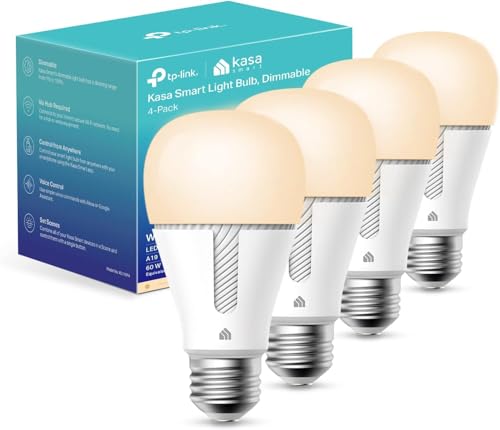
Kasa Smart Light Bulb KL110 (4-Pack)
Is This Page For You?
- ✓You want smart bulbs in multiple rooms without a hub investment — each KL110 connects independently to your WiFi. You can start with one bulb and add more later without buying bridge hardware. For 4+ bulbs across 2–3 rooms, the KL110 4-pack is significantly cheaper than Hue starter kits that include the hub cost.
- ✓You need lamps that work even when the smart switch is flipped off — unlike a smart switch approach, these are smart bulbs. They work even if someone turns off the wall switch… as long as the switch is on. The advantage over a smart switch: you can move these between lamps, table fixtures, and outlets easily. No electrical work.
- ✓You want warm white dimming for living rooms and bedrooms — 2700K is the standard incandescent-equivalent warm white. The KL110 dims from 100% (800 lumens) down to about 1% (a nightlight level) with a smooth curve. Reviewers specifically cite the low-end dimming as better than competing no-hub bulbs.
- ✗You want color-changing bulbs — the KL110 is warm white only, no color. For RGB color or tunable white (adjustable color temperature), look at the Kasa KL135 or KL130 — different SKUs sold separately. The KL110 is the "just make it dimmable and smart" bulb.
WiFi Smart Bulbs vs. Hub-Required Systems
Hub systems (Philips Hue, IKEA): Use Zigbee protocol for bulb-to-hub communication. Advantages: lower per-bulb WiFi device load on your router, bulbs can communicate with each other directly if the hub goes offline, typically better multi-bulb synchronization. Disadvantages: $40–60 hub required upfront, one more device on your network, hub failure breaks everything.
WiFi-direct systems (Kasa KL110): Each bulb is an independent WiFi device. Advantages: no hub purchase, simpler setup, no single point of failure. Disadvantages: each bulb occupies one device slot on your router and one IP address. Homes with many smart devices can hit router device limits — typically 30–50 devices for consumer routers. If you're planning 20+ smart bulbs, Zigbee is more scalable.
For most buyers adding 4–8 smart bulbs to a normal household network, router device counts are not an issue. The no-hub cost savings and simpler setup make WiFi-direct the better practical choice at this scale.
What Verified Buyers Report
Reviewers describe setup time of 2–3 minutes per bulb: screw in, open Kasa app, tap "Add Device," enter WiFi password once, done. Subsequent bulbs on the same network reuse the saved credentials. The setup process works reliably without the common WiFi pairing failures that reviewers report with competing brands.
A meaningful portion of KL110 reviews are from buyers who have used the bulbs for 2–3 years without failures or WiFi dropout issues. This is notable because smart bulb reliability is a common complaint category — LED drivers in smart bulbs often degrade faster than the LED itself. Kasa's driver design appears to hold up better than average at this price tier.
The most common criticism in KL110 reviews is the universal smart bulb problem: household members flip the physical wall switch off, cutting power to the bulb and removing it from the network. When the switch is turned back on, the bulb returns to full brightness instead of its programmed state. The workaround: a smart switch that controls the socket (see Kasa KS220), or clear household communication about leaving the physical switch on.
Specs at a Glance
| Pack size | 4 bulbs |
| Base | E26 standard (A19 shape) |
| Brightness | 800 lumens (60W equivalent) |
| Color temperature | Soft white — 2700K |
| Dimming | 1–100% via app or voice |
| Protocol | WiFi 2.4GHz — no hub |
| Compatibility | Alexa, Google Home |
| Rated lifespan | 25,000 hours (~22 years at 3h/day) |
More Smart Home Reviews
Get our best picks in your inbox
No spam. Just honest Amazon reviews, once a week.
Unsubscribe any time. We'll never sell your address.