Your Patio Heater Rusted Through After Two Seasons — The Fire Sense Commercial Uses Restaurant-Grade Steel That Won't
You bought a patio heater two years ago. It looked great the first season — shiny finish, solid heat, everything you wanted for those cool evenings on the deck. By the second winter, the reflector had rust spots. By spring, the base was flaking. You stored it “properly” — covered, in the garage — and it still corroded. The paint bubbled. The chrome peeled. You're now shopping for a replacement, and you're annoyed because a $150 heater shouldn't be disposable after two seasons.
The problem wasn't maintenance. It was materials. Most residential patio heaters use painted steel or thin-gauge 201 stainless — metals that look fine in the showroom but can't handle real outdoor exposure. The Fire Sense 01775 uses 304 stainless steel — the same grade restaurants use for outdoor kitchen equipment, the same grade hospitals specify for surgical instruments. It doesn't rust. It doesn't flake. It doesn't need paint to protect it because the alloy itself resists corrosion. Add the highest BTU output of any residential standing heater we've tested (50,000 BTU), electronic push-button ignition, a weighted base with heavy-duty wheels, and CSA certification — and you get a heater that 3,500+ Amazon buyers have rated 4.4 stars. Not because it's cheap. Because it lasts.
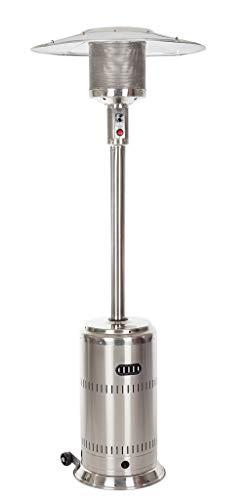
Best Build Quality Patio Heater
Fire Sense 01775 Commercial Patio Heater
4.4★ · 3,500+ reviews · ~$249–$349 · 50,000 BTU · 304 stainless steel · Electronic ignition · 9ft heat radius
Why 304 Stainless Matters
Not all stainless steel is the same. The number matters — a lot. Here's the hierarchy you'll find in patio heaters:
- Painted steel: The cheapest option. Looks fine for one season. Paint chips from heat cycling (expanding when hot, contracting when cold), exposing bare steel underneath. Rust follows within months.
- Powder-coated steel: Better than paint, but still a coating over regular steel. Powder coat is thicker and more durable, but it still scratches and chips at joints, bolt holes, and anywhere metal contacts metal during assembly.
- 201 stainless steel: The budget “stainless” used in most residential heaters. Contains less nickel than 304, which means less corrosion resistance. Will show surface rust in humid or salt-air environments within 1–2 years.
- 304 stainless steel (this heater): Contains 18% chromium and 8% nickel. The chromium forms an invisible oxide layer that actively repairs itself when scratched. This is the grade used in restaurant equipment, commercial kitchen hoods, brewing tanks, and marine hardware. It resists salt air, rain, UV exposure, and the constant heat cycling of a patio heater. It's not indestructible — nothing is — but it's the highest-grade stainless you'll find in a residential patio heater.
The Fire Sense 01775 uses 304 stainless throughout — not just the housing, but the reflector, the post, and the base. The finish is unpainted because it doesn't need paint. The stainless itself is the finish. That's why buyers in coastal Florida and Southern California report 5+ years of outdoor use without corrosion.
What 3,500+ Buyers Say
Heat output is the top compliment. 50,000 BTU pushes warmth out in a 9-foot radius — that's the largest effective heat zone of any standing residential heater we've tested. Buyers consistently report being comfortable in short sleeves down to 45–50°F within that radius. Multiple reviewers mention guests commenting on how much heat the unit throws.
Build quality is the second most-cited positive. Buyers who previously owned painted or 201 stainless heaters notice the difference immediately. The 304 stainless is thicker, heavier, and has a solid feel that cheaper heaters lack. Several restaurant owners have reviewed this unit, confirming it matches the commercial equipment they use at their businesses.
Weight is a double-edged sword. The Fire Sense is heavier than most residential heaters — the thicker gauge steel and weighted base add significant heft. Buyers praise the stability (it doesn't wobble or tip in wind like lighter units) but note that repositioning it requires using the heavy-duty wheels. You're not going to pick this up and carry it across the patio.
Electronic ignition is universally loved. Push the button, it lights. No striking, no multiple attempts in cold weather, no worn-out piezo igniters. Buyers who previously dealt with finicky piezo systems call this the most underrated upgrade.
Some reports of missing base weight. A small but recurring complaint: some units arrive without the sand-fill base weight properly installed or the fill cap is loose. This is a quality control issue, not a design flaw — the base is designed to be filled for stability. Check immediately upon unboxing.
Pros
- ✓50,000 BTU — highest output of any residential standing heater we tested, 9ft heat radius
- ✓304 commercial-grade stainless steel throughout — resists rust, salt air, and UV without paint or coating
- ✓Electronic push-button ignition — more reliable than piezo, works consistently in cold weather
- ✓Weighted base + heavy-duty wheels — stable enough for wind, mobile enough to reposition
- ✓CSA certified with auto-tilt shutoff — gas shuts off automatically if the unit tips
- ✓Fire Sense operates a full US repair center with individual replacement parts available
Cons
- ✗Price — $249–$349 is significantly more than painted steel competitors under $200
- ✗Heavy — the thicker gauge steel and weighted base make this harder to move than lighter heaters
- ✗Unpainted stainless shows fingerprints and water spots more visibly than powder-coated finishes
- ✗Some units ship with missing or improperly installed base weight — check upon delivery
- ✗Assembly takes 45–75 minutes and the instructions could be clearer
Who Should Buy This
- ✅ You live near the coast or in a humid climate and need a heater that won't corrode
- ✅ You've already had a cheaper patio heater rust out and don't want to replace it again in two years
- ✅ You want the maximum heat output available in a residential standing heater — 50,000 BTU
- ✅ You value long-term cost-per-season over upfront price — a $300 heater that lasts 8 years beats two $150 heaters that last 2 each
- ✅ You want a manufacturer that sells replacement parts instead of forcing a full replacement
Who Should Skip This
- ❌ Your budget is under $200 — the Hiland HLDS01-WCGT delivers 48K BTU for significantly less
- ❌ You want a heater that doubles as a visual centerpiece — the AZ Pyramid Glass Tube with its visible flame column is far more striking
- ❌ You store your heater indoors every winter and already get 4–5 seasons from cheaper models — the 304 stainless premium may not pay for itself
- ❌ You need to move the heater frequently by hand — the weight makes casual repositioning harder than lighter models
- ❌ You prefer a dark or bronze finish that blends with outdoor furniture — the unpainted stainless is a specific look that doesn't suit every patio aesthetic
How It Compares
vs. Hiland HLDS01-WCGT
The Hiland delivers 48,000 BTU for under $200 — that's 95% of the Fire Sense's heat output at roughly 60% of the price. The trade-off is materials: the Hiland uses hammered bronze powder coat over steel, which looks great but will show wear after 2–3 seasons of outdoor exposure. The Hiland also uses piezo ignition instead of electronic. If budget is your priority and you're willing to store it carefully, the Hiland is the smarter buy. If you want the heater that lasts longest with the least maintenance, the Fire Sense wins.
vs. AZ Pyramid Glass Tube
Completely different products. The Pyramid outputs roughly 40,000 BTU with a smaller heat radius (~6 feet vs. 9 feet), but it has a visible flame column inside a quartz glass tube that looks absolutely stunning at night. The Fire Sense delivers significantly more heat — 10,000 BTU more — with a much larger coverage area. Choose the Pyramid if ambiance matters more than raw heating power. Choose the Fire Sense if you actually need to keep people warm on 45°F evenings.
vs. Hiland HLDS01-BST Stainless Steel
The Hiland BST is also stainless steel, but it uses a thinner gauge and a lower grade of stainless than the Fire Sense's 304. It outputs 48,000 BTU (vs. 50K) and uses piezo ignition (vs. electronic). The BST sits between the budget WCGT and the premium Fire Sense — better corrosion resistance than painted steel, but not as durable as true 304. The Fire Sense costs more but delivers thicker stainless, more BTU, better ignition, and access to replacement parts.
50,000 BTU in Restaurant-Grade 304 Stainless Steel
3,500+ buyers chose the Fire Sense 01775 because they wanted a patio heater that wouldn't rust, wouldn't flake, and wouldn't need replacing after two seasons. The highest BTU output in its class. Electronic ignition that works every time. A manufacturer that actually sells replacement parts. This is the buy-it-once patio heater.
Check Current Price on Amazon →Frequently Asked Questions
Is 304 stainless steel worth the extra cost for a patio heater?
How does electronic ignition compare to piezo ignition?
Can the Fire Sense 01775 handle coastal or salt air environments?
Why is the Fire Sense 01775 heavier than competing patio heaters?
Does Fire Sense sell replacement parts for the 01775?
Compare Other Patio Heaters
Get our best picks in your inbox
No spam. Just honest Amazon reviews, once a week.
Unsubscribe any time. We'll never sell your address.